Padel is a racket sport played in doubles on a 10x20 metre enclosed court. The court has glass walls and metallic mesh fencing, and the ball can be played off these walls after bouncing on the floor. If that sounds like a hybrid of tennis and squash, it is — and it's probably the most fun you can have with a racket in your hand.
Globally, padel has over 30 million players. In Spain alone there are more padel courts than tennis courts. In New Zealand, the sport has grown from nothing in 2021 to 28+ courts across 10 clubs. Most people who try it are back within a week.
Where Padel Came From
Padel was invented in Mexico in 1969 by Enrique Corcuera, who built the first court at his house in Acapulco. The game spread to Spain via Argentina in the 1970s, and Spain became — and remains — the world capital of padel. The Spanish took it to Latin America, then to Europe, and it's now one of the fastest-growing sports in the world.
New Zealand discovered padel relatively late, with the first dedicated courts opening around 2022. That late start is actually an advantage for NZ players now — the infrastructure is new, the courts are modern, and the community is in that exciting early growth phase where everyone knows each other and the sport still feels like a discovery.
The Court
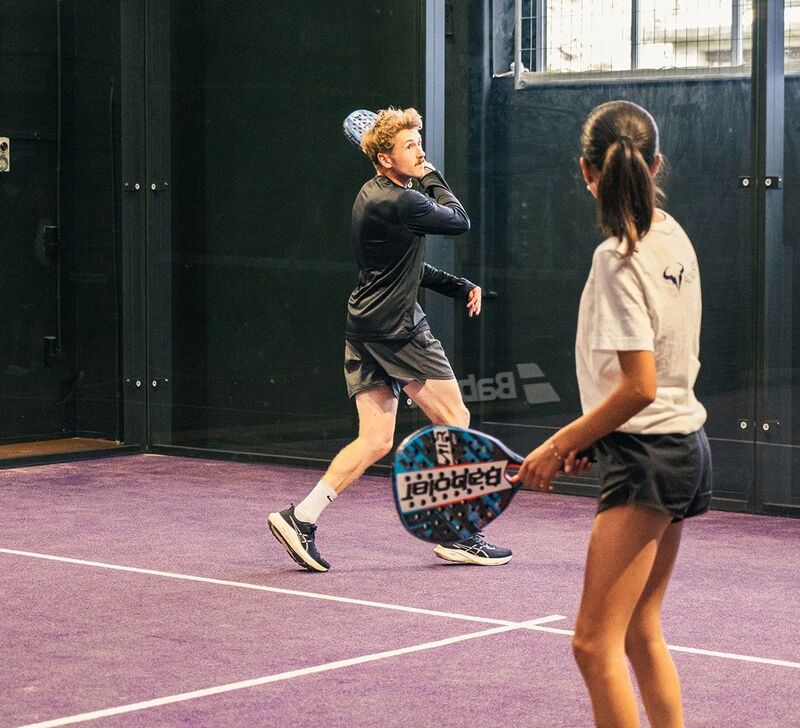
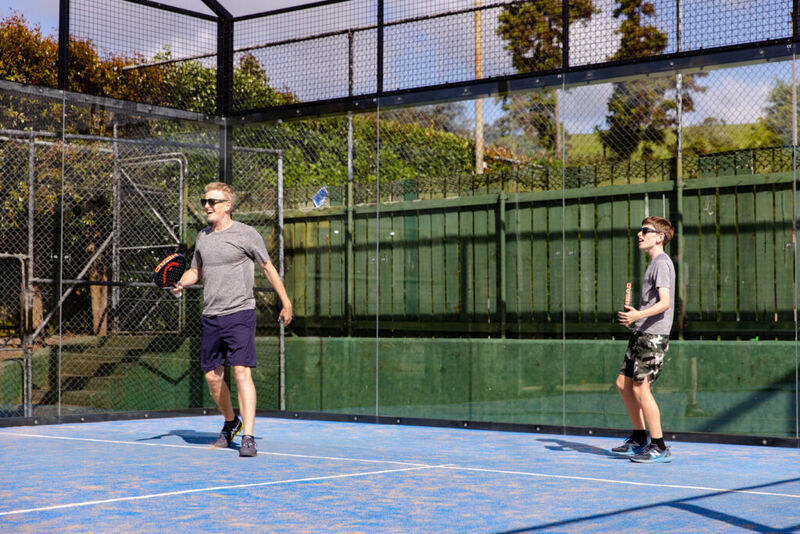
A padel court is 10 metres wide and 20 metres long — about one-third the size of a tennis court. The court is completely enclosed by a combination of glass walls (at the back and sides) and metallic mesh fencing. The net runs across the middle at the same height as a tennis net.
The glass walls are not just decorative. They're playing surfaces. When the ball bounces off the floor and hits the glass, it can be played back into the court. This is what makes padel unique — you're not just playing across the net, you're playing with the entire enclosed space.
The court is divided into service boxes just like tennis. Lines on the floor mark the service areas, and that's about as complex as the court markings get.
The Racket and Ball
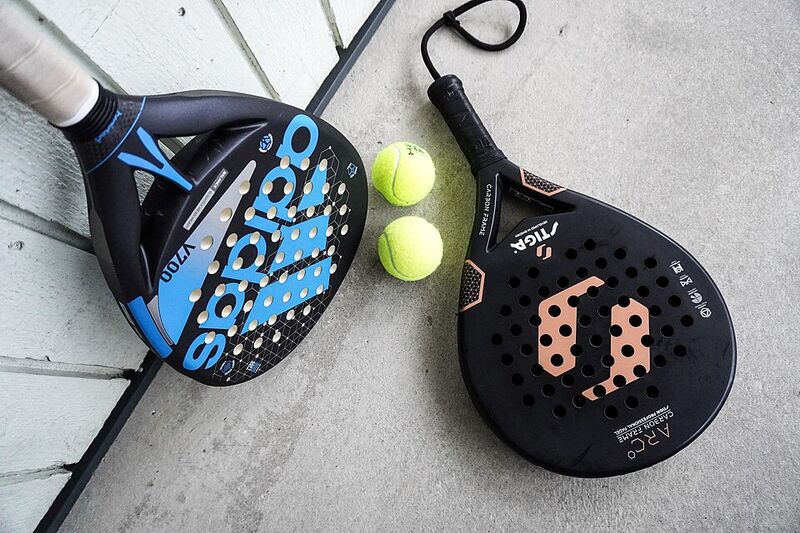
A padel racket is solid — no strings. The face is perforated with holes. Rackets are typically shorter and wider than tennis rackets, with the handle accounting for a smaller proportion of the total length. The solid face gives the ball a distinctive feel: firm but with some give, very different from the string bed of a tennis racket.
Padel balls look like tennis balls but are slightly less pressurised. They bounce a bit lower than a standard tennis ball, which is exactly what you want in the enclosed court environment.
For your first few sessions, hire gear from the club. Once you know you want to continue, buying your own racket makes a noticeable difference. PadelShop NZ stocks all the major brands with NZ-specific advice on choosing the right racket for your level and playing style.
The Rules
The Serve
The padel serve is underhand. The server stands behind the service line, lets the ball bounce, and hits it at or below waist height. The ball must land in the diagonal service box. If it hits the glass wall at the back of the service box and bounces out, that's a fault — the only time the glass working against you in the rules.
There are two attempts (like tennis), and the golden point rule applies at deuce at most social and club levels: instead of playing advantage/deuce, the receiving pair chooses whether to receive on the right or left.
During Play
Once the ball is in play, the core rules are:
- The ball must bounce once on the floor before hitting a wall
- After bouncing on the floor, the ball can hit the glass wall — and can be returned after that wall bounce
- You can play the ball out through the mesh door openings (if the court has them) and then play the ball back in — allowed and quite dramatic when it happens
- The ball cannot bounce twice on the floor before being hit
- The ball cannot be volleyed directly off the wall (you have to let it bounce on the floor first)
Scoring
Padel scoring is identical to tennis: 15, 30, 40, game. Six games wins a set. Most matches are best of three sets. At 6-6, a tiebreak (first to 7 points with a 2-point lead) decides the set. A full match typically lasts 60-90 minutes.
How Padel is Played
Padel is always doubles. Four players, two pairs, one court. This is non-negotiable — there is no singles version played at any serious level. The doubles format is fundamental to why padel has such a strong social character: you always need three other people, which means the sport builds relationships in a way individual sports never can.
At the beginner level, most of the action happens near the net. Short volleys, reflexes, and positioning matter more than power at this stage. As players develop, the back wall becomes a weapon — skilled players use rebounding angles that beginners haven't started to see yet.
The tactical depth of padel at the high level is comparable to chess. The enclosed space creates a three-dimensional game where angles, positioning, pace changes, and psychological pressure all interact. That depth is why the sport is so compelling long-term.
Padel vs Tennis: Key Differences
| Feature | Padel | Tennis |
|---|---|---|
| Court size | 10m x 20m | 23.77m x 10.97m |
| Format | Always doubles | Singles or doubles |
| Walls | Glass and mesh, in play | None |
| Racket | Solid, perforated face | Strung |
| Serve | Underhand, must bounce | Overhead, no bounce |
| Ease of learning | Easier | Harder |
| Scoring | Same as tennis | Standard tennis scoring |
For a deeper comparison, read Padel vs Tennis: the key differences.
Why is Padel Growing So Fast?
Several factors combine to make padel unusually appealing:
Low barrier to entry. Most people can have a fun rally within 20 minutes of picking up a racket. You don't need the years of technique investment that tennis requires to enjoy it. That low barrier brings in people who tried tennis, found it frustrating, and gave up.
Physically accessible. The smaller court and slower pace (compared to squash) mean padel is playable across a wide age range. Many clubs have active players well into their 60s and 70s. The wall play also reduces the need for extreme court coverage — the glass gives you another chance when a shot goes into the corner.
Social by design. Because padel is always doubles, you always play with people. The social infrastructure that develops around padel courts — WhatsApp groups, after-match drinks, regular social events — creates genuine community in a way that doesn't happen around a tennis court where singles play is common.
Addictive depth. It's easy to start but hard to master. The wall play creates tactical possibilities that take years to fully explore. Players who start thinking they'll play once a week find themselves booking courts three times before they know it.
Padel in New Zealand
New Zealand padel has grown from zero dedicated courts in 2021 to 28+ courts across six regions in 2026. The sport arrived later here than in Europe or Latin America, but the growth trajectory has been steep.
Auckland leads with 15 courts across five venues. Wellington has four indoor courts at Padel House NZ. Christchurch has three venues across the city. Bay of Plenty, Waikato, and Nelson/Tasman all have established venues.
Find the nearest court to you in the complete NZ padel court directory.
How to Play Your First Game
Booking a first padel session is straightforward. You need four people (or ask your venue about social mixing sessions if you don't have a full group). You need court shoes with non-marking soles. Everything else — rackets, balls, instruction — the venue provides.
For a complete walkthrough of exactly what to expect, read the first time padel guide. It covers everything from what to wear to basic tactics for your first hour on court.
Professional Padel: The World Tour
At the elite level, padel is contested on the Premier Padel Tour — a global circuit with events across Spain, Latin America, the Middle East, and beyond. The top players are full professionals with lucrative sponsorships and significant prize money.
World number ones Alejandro Galan and Arturo Coello dominate the men's game. The women's tour features stars like Alejandra Salazar and Gemma Triay. Watching elite padel — available on YouTube and streaming platforms — is the fastest way to understand what the sport looks like at its best and why it's so compelling to watch.
New Zealand now hosts international standard events including the NZ Padel Open, giving Kiwi players the chance to watch and compete against high-level players without travelling overseas.
Getting the Right Gear
When you're ready to get your own equipment:
Racket: Start with a mid-range beginner racket (round face, softer materials). Avoid advanced teardrop-shaped rackets until your technique is established. PadelShop NZ has a good range across all budgets with advice on what suits beginners.
Shoes: Padel-specific shoes or tennis court shoes. Herringbone sole pattern for good grip. Proper lateral support matters — padel involves a lot of lateral movement and running shoes aren't designed for it.
Balls: Your venue provides balls. When buying your own for practice, get padel-specific balls (not regular pressurised tennis balls — they bounce too high in the enclosed court).
Frequently Asked Questions
What is padel?
Padel is a racket sport played in doubles on a 10x20 metre enclosed court with glass walls and mesh fencing. The ball can be played off the walls after bouncing on the floor. It's a hybrid of tennis and squash, and one of the fastest-growing sports in the world with 30+ million players globally.
How is padel different from tennis?
Padel courts are smaller and enclosed with walls. Padel is always doubles. The racket has no strings. The serve is underhand. The ball can be played off glass walls. Most people find padel easier to start playing than tennis, but the tactical depth is comparable at advanced levels. Read the full padel vs tennis comparison.
What are the rules of padel?
Scoring follows tennis rules. The serve is underhand and must bounce before being hit. Once in play, the ball can be played off any wall after bouncing on the floor. The ball cannot bounce twice on the floor. The game is always played in doubles. For full rules detail, the official FIP rulebook is the authoritative source.
Is padel hard to learn?
Padel is easier to learn than tennis. The enclosed court keeps the ball in play longer, the underhand serve is simple, and the smaller court means less ground to cover. Most beginners can enjoy a real game within 20-30 minutes of their first session. Wall play takes longer to master but isn't required to have fun at the beginner level.
Where can I play padel in New Zealand?
New Zealand has 28+ courts across Auckland, Wellington, Christchurch, Tauranga/Papamoa, Hamilton, and Nelson. See the full NZ court directory for every venue with addresses and booking info.
How long does a padel match take?
A typical 3-set match takes 60-90 minutes. A single set is around 20-30 minutes. Court bookings are usually in 60 or 90-minute slots. Most social players book 90 minutes to ensure there's no rush finishing a set.
Last updated: June 2026